
STUDENTS TAKE PART IN DIGITAL DETOX
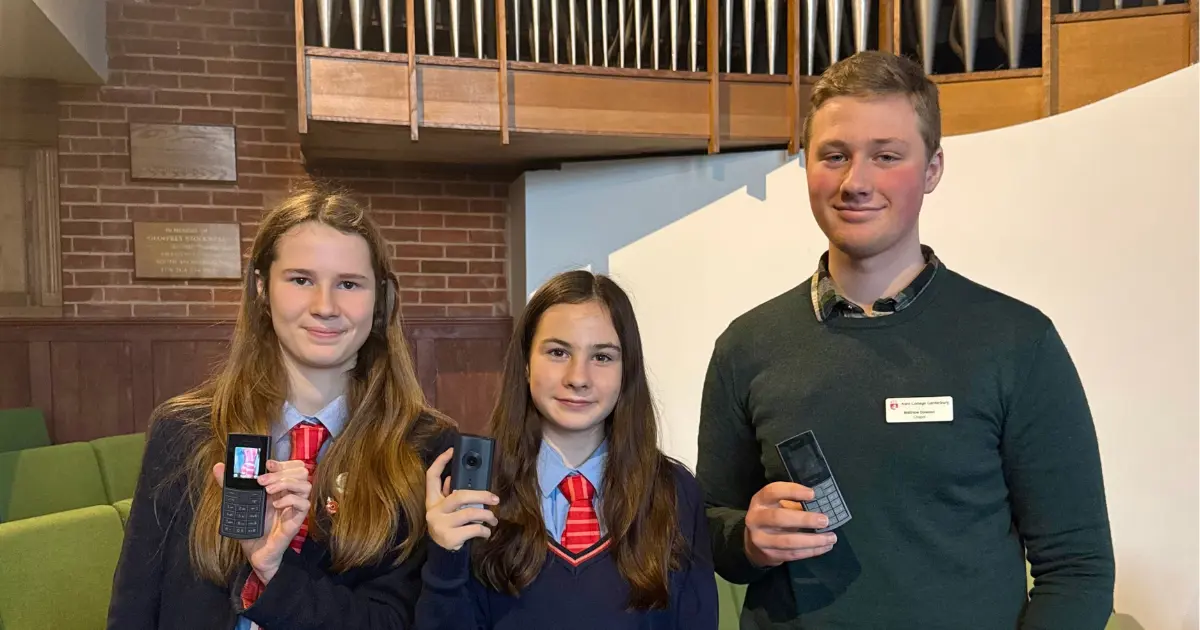
Students from Kent College successfully completed a week-long smartphone detox between Friday 16 and Friday 23 January 2026, taking part in a social experiment designed to explore young people’s relationship with digital devices. The initiative proved so popular that a waiting list quickly formed at KC, demonstrating a clear desire among students to understand and improve their screen‑time habits.
The pilot initiative was carried out in collaboration with the University of Kent and Portrait Theatre, as part of the Generation FOMO project, a wider programme that uses performing arts and research to encourage conversation about smartphone and social media use.
During the week, participating students voluntarily handed in their smartphones and were provided with basic Nokia phones that allowed only calling and texting, while their personal devices were stored safely. Researchers from the University of Kent’s School of Psychology interviewed students before and after the experiment to explore changes in sleep, concentration, stress and overall wellbeing.
Ahead of the detox, students expressed mixed emotions including curiosity and nervousness, alongside a willingness to understand their habits more deeply. Matthew, a Year 13 pupil, said he was “interested to see where I unnecessarily use my phone and how much it affects my mood,” while Year 9 student Tinneke noted that she believed her phone “definitely affects my stress levels, but I don’t know to what extent, so I’m excited to find that out.”
Post-experiment reflections showed that reduced screen time had a positive impact on students’ routines and wellbeing. Evangeline, Year 9 reported better sleep and less pressure from constant messaging, explaining, “I wasn’t concentrating on who was messaging me all the time… I wasn’t scrolling – I found myself doing something else instead.”
Tinneke described the experiment as “a great opportunity, especially if you are dependent on social media,” noting that while contacting friends was harder, she spent more time with her family and needed social media less than expected. Similarly, Matthew reported improved concentration, especially with schoolwork, increased family time, and said he plans to use Instagram less in the future.
Reflecting on early findings from the week, Dr Lindsay Cameron, Lecturer in Developmental Psychology at the University of Kent, explained: “So far what we’ve seen is an increase in sleep, an increase in connection with other people and with nature, and young people telling us they’re spending more time with friends and family in shared spaces at home. Many say they feel calmer and more like themselves.”
The social experiment forms part of the Generation FOMO initiative, a verbatim theatre project devised by Portrait Theatre in collaboration with researchers, schools and young people. A new play created from earlier interviews has toured local schools and was performed at the Houses of Parliament earlier this month, drawing national attention to the impact of technology on young people’s mental health and wellbeing. With the Online Safety Act currently under public debate, the project is particularly timely, offering valuable insight into how children engage with digital platforms and the potential benefits of mindful and reduced smartphone use.
Kent College Latest News

Smartphone Detox Social Experiment

Fundraising for East Kent Mind

Top Global IB School 2025
Celebrating our Successes
A Level Results Day 2025

Electra at Edinburgh Fringe

KC attend National Theatre Awards

Student Spotlight Omid

Head student gets DofE Gold Award

U16 National Cup Final

International Evening

Michael Weller Competition

Kent Cricket Masterclass
Faraday Challenge

Regional Champs

U13 Hockey County Title

dance competition

Special Guest Masterclass

KC Alumni Spotlights